Cryptographic Signatures For Zip Distributions
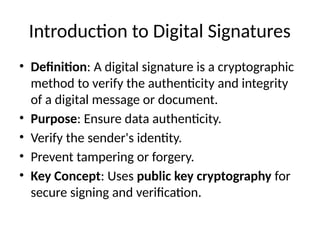
This is foundational to blockchain operations, where each transaction have to be signed by the sender’s personal key to be thought of legitimate. No, a digital signature just isn’t encryption; it’s a cryptographic mechanism for verifying authenticity and integrity, not confidentiality. Digital signatures use a non-public key to generate a novel signature for a bit of knowledge, and a corresponding public key allows anybody to confirm that the signature is legitimate and the information is unchanged.
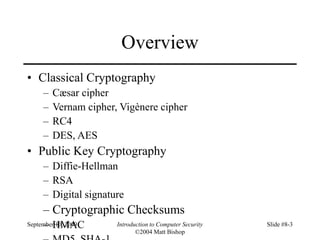
Widespread algorithms used for this objective include ECDSA (Elliptic Curve Digital Signature Algorithm), utilized by Bitcoin and Ethereum, and EdDSA (Edwards-curve Digital Signature Algorithm). A cryptographic signature is a mathematical scheme for verifying the authenticity and integrity of digital information, using a pair of cryptographic keys. Digital signatures using PKI contain a trusted third celebration that can hold knowledge safe and make sure the integrity of messages and paperwork.
Another use for digital signatures is for financial https://fahzaenterprise.com/16-best-dropshipping-companies-on-your-ecommerce-business/ transactions, that are required to be secure, and id verification is crucial. Cryptographic signatures present a way for verifying the integrity of knowledge. By signing knowledge with a digital signature, anyone can confirm the signature that then proves that the information originated from you.
This part details the most prevalent algorithms used in blockchain and web3. Cryptographic signatures are digital mechanisms used to confirm the authenticity and integrity of digital documents and messages. When applied to content material generated by LLMs—and content material created by users—they provide a safe, tamper-evident seal that confirms the content’s origin and ensures it remains unaltered after creation. A digital signature is a mathematical scheme for verifying the authenticity of digital messages or documents. It is the cryptographic equivalent of a handwritten signature or a stamped seal, but with significantly larger inherent security. A cryptographic signature is a mathematical scheme for verifying the authenticity and integrity of digital knowledge, serving as the inspiration for belief in decentralized techniques.
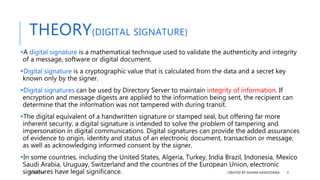
Our merchandise are signed with a cryptographic signature to offer evidence that the software has not been tampered with and to verify Purple Hat because the software program publisher. This offers a higher degree of security and assurance for users of our merchandise. A code signing certificates is a digital certificates that’s signed by the developer of software or a particular software. This might help to authenticate that the product is real and has not been tampered with or altered. A digital signature can provide a excessive degree of safety, because it helps to verify the integrity of messages and authenticity of the sender. You can see how essential a task digital signatures can play in secure message transmission.
Cryptographic Signature Vs Digital Signature
If the answer is a stored picture of a handwritten name, the doc has a signature within the authorized sense and no integrity safety whatsoever. Verification returns certainly one of two answers, legitimate or invalid, with nothing in between. Present a signature made with a unique non-public key and verification fails. We provide built-in, native support for dealing with PKI signing, including a parser for frequent PFX/P12 certificate recordsdata. This means your developers spend much less time integrating specialised cryptography libraries and extra time constructing options. How you implement digital signatures relies upon totally on whether or not the signing must be interactive or automated.
Key Takeaways
The message we passed to the SignMessage() technique is now hashed and digitally signed. The System.Security.Cryptography namespace will provide the cryptographic services we need for this application. The namespace supplies providers similar to message authentication, encoding and decoding of data, random quantity generation, hashing, and so on. The System.Console static namespace we brought into scope permits us to type less code. As of C# 6.zero, static lessons can be brought directly into scope without us absolutely qualifying the static namespace. When a specification says “digital signature”, ask what sits underneath.
- It is a foundational primitive for blockchain security, enabling non-repudiation and proof of ownership.
- Frequent algorithms used for this function embody ECDSA (Elliptic Curve Digital Signature Algorithm), utilized by Bitcoin and Ethereum, and EdDSA (Edwards-curve Digital Signature Algorithm).
- We have taken benefit of this facet of our build course of and prolonged it by combining all the hashes for a particular launch and packaging them right into a “SHA256SUM” file.
- A cryptographic signature is a mathematical scheme for verifying the authenticity and integrity of digital data.
- But if you have two or three signatures all made by the same public key, then you’ll find a way to repeat this process on all of them and see if they persistently produce the identical public key.
Understanding how digital signatures function is important for anybody navigating the present subject of cybersecurity and digital id. A cryptographic signature is a digital code generated by a non-public key that uniquely binds to a particular piece of information, such as a transaction or message. The signature proves that the information originated from the holder of the non-public key (authentication) and that it has not been altered since it was signed (integrity).
]]>